Event · Central Harlem
At Harlem Hospital in NYC, Restored WPA Murals by Alston and Hayes and Rhoden's "The Family"
NYC Health + Hospitals has finished conserving three Depression-era murals by Charles Alston and Vertis Hayes in Harlem Hospital's Mural Pavilion, along with John Rhoden's 22-foot bronze The Family above the entrance at 506 Lenox Avenue.
By NBT Editors · 2026-10-16
Type
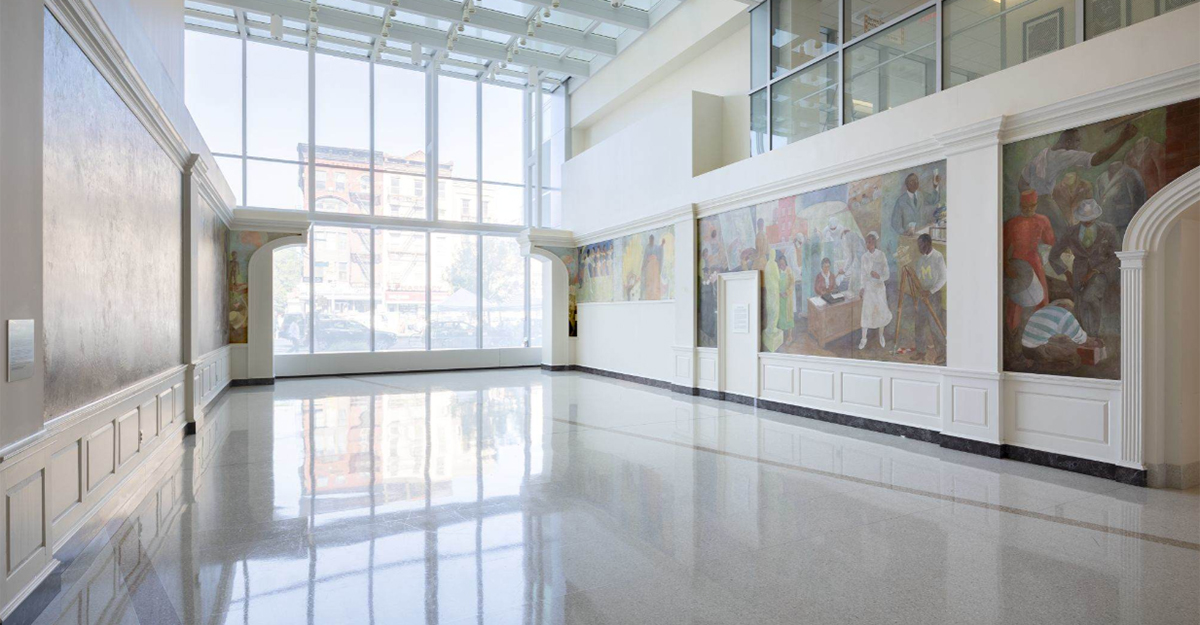
NYC Health + Hospitals' Arts in Medicine department announced on October 14 that conservation is complete on some of the most significant works by Black artists in its collection at Harlem Hospital, 506 Lenox Avenue: three Depression-era murals in the hospital's Mural Pavilion and John Rhoden's bronze sculpture above the entrance.
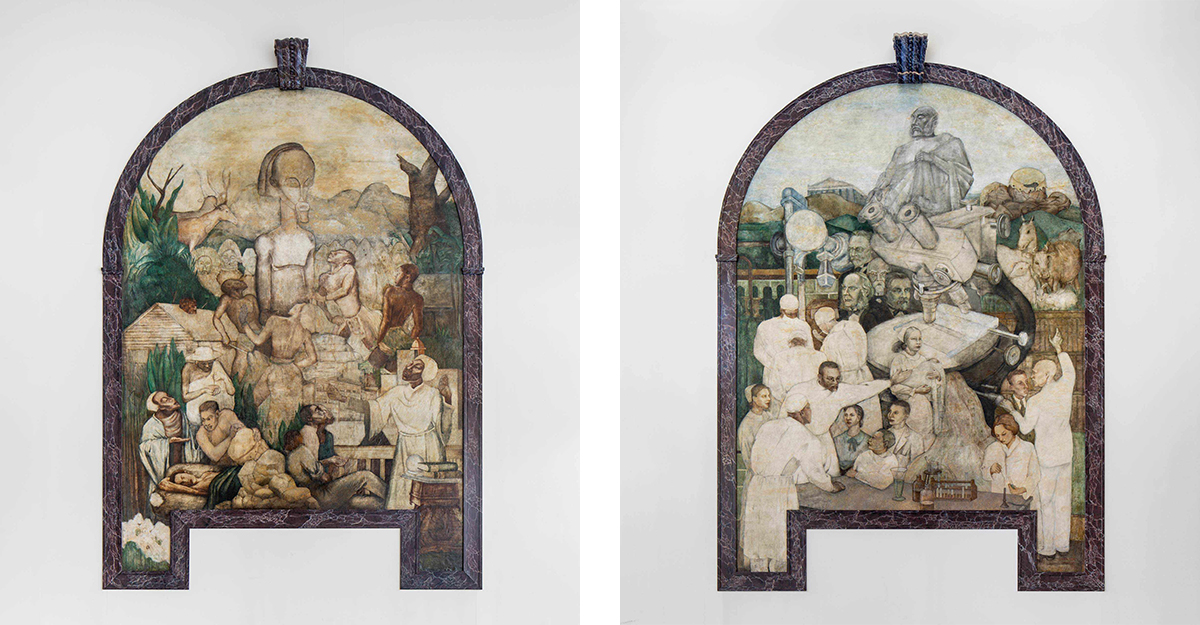
The murals were made under the Federal Art Project of the Works Progress Administration. Charles Alston, the first African American supervisor in the Federal Art Project, painted two companion works, Magic in Medicine and Modern Medicine (both 1940). They set traditional healing practices from different cultures beside contemporary medical science and show a racially integrated hospital staff. Vertis Hayes made Pursuit of Happiness (1937), which spans 800 square feet across eight panels and traces African American history from ancestral African villages to 20th-century professional and cultural achievement.
Foreground Conservation & Decorative Arts carried out the mural work on site over two weeks earlier this year, supported by Bloomberg Philanthropies' 2025 funding of the Arts in Medicine department.
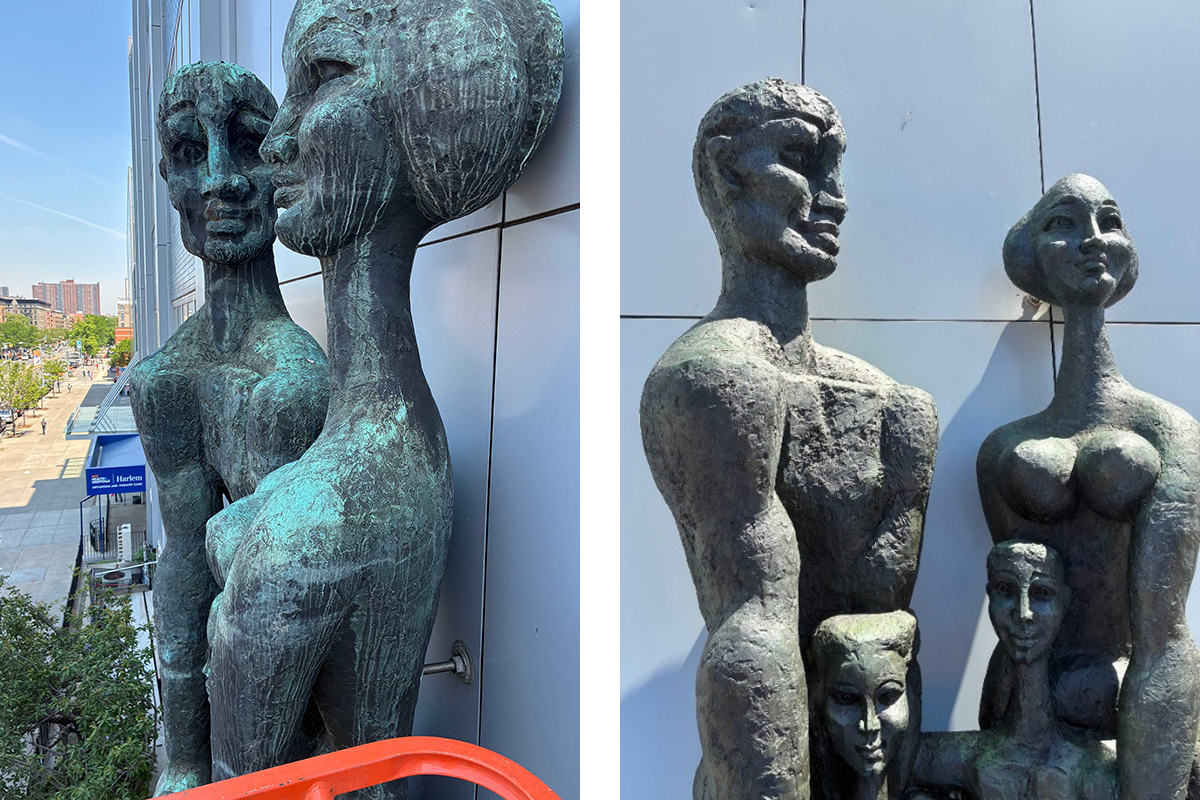
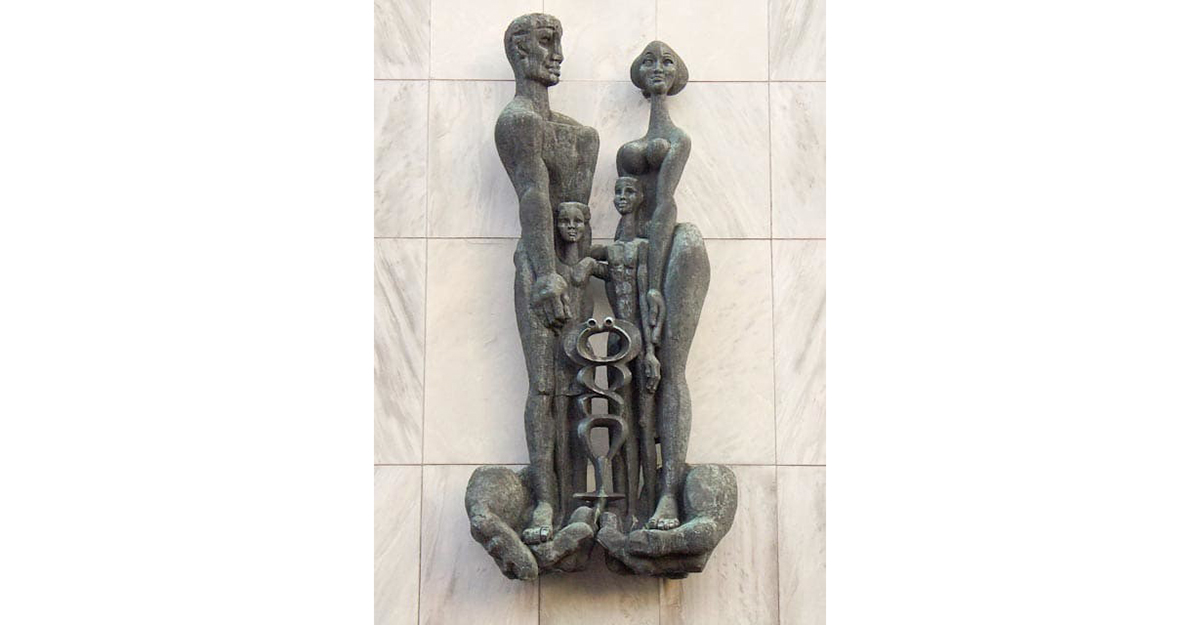
Rhoden's The Family (1969) stands 22 feet high. It shows a family lifted by hands that seem to extend from the hospital itself, supported by the Rod of Asclepius. It is one of three sculptures Rhoden created for the city's public hospital system between 1966 and 1970, alongside Mitochondria at Bellevue and Monumental Abstraction at Metropolitan Hospital. Tatti Conservation treated it in spring 2026. After nearly 60 years outdoors, the bronze carries a patina of green, brown and black; the conservators aimed to harmonize the surface tones while keeping the underlying patina.
The health system's collection, which began in the 1930s with WPA commissions, now numbers more than 8,000 works. Pieces from it can also be viewed in the Arts in Medicine guide on Bloomberg Connects.