Exhibition · The Studio Museum in Harlem · Central Harlem
Kapwani Kiwanga: BLEED at The Studio Museum in Harlem
Kapwani Kiwanga's site-specific commission BLEED fills the second-floor project gallery at the Studio Museum in Harlem through April 1, 2027. A quilt motif tied to the Underground Railroad is rendered in fabric dyed with Atlantic seawater, pokeberry and indigo.
By NBT Editors · 2026-10-16
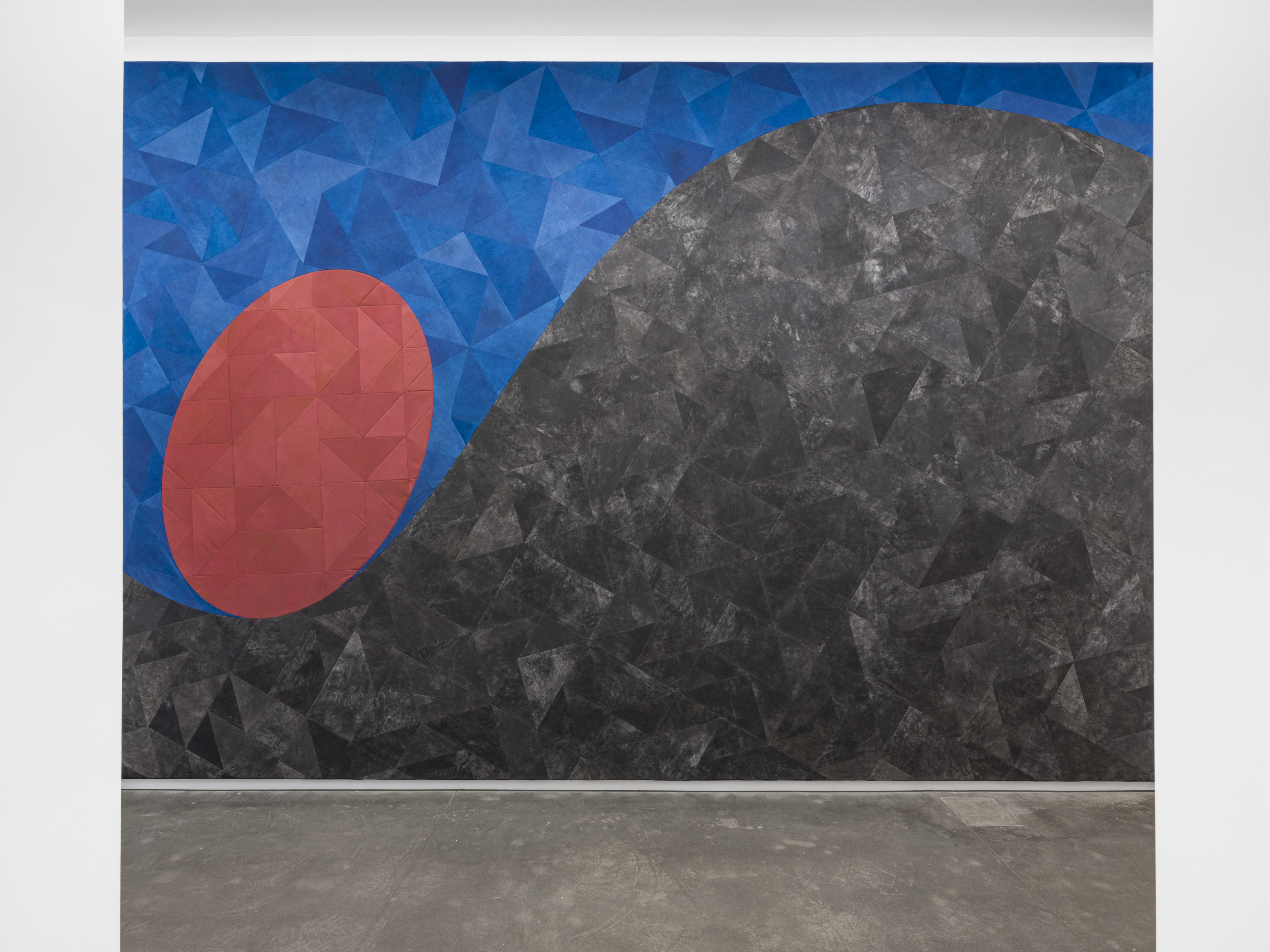
The Studio Museum in Harlem has given its second-floor project gallery to BLEED, a new site-specific commission by Kapwani Kiwanga, an artist with French and Canadian ties. The work opened on March 11, 2026, and stays up until April 1, 2027, a run of more than a year. It is organized by Yelena Keller, Associate Curator.
The starting point is quilting. Along the Underground Railroad, quilts hung on clotheslines are believed to have carried coded information in their stitched patterns. Kiwanga takes one such motif, a chain of triangles called "flying geese" that was said to point people north, and turns it into undulating bands of black, blue and crimson. The piece draws on Black traditions of sharing knowledge in forms outsiders might not read.
The colors come from three natural dye processes, each tied to a history. The mottled black fabric was made by oxidizing pigment with salt water gathered from the Atlantic, a reference to the transatlantic trade and to the sea as a witness and keeper of memory. The deep red circular form is dyed with pokeberries, a plant native to North America known for its toxicity yet used both as a clothing dye and, when properly prepared, as medicine. In 1816 a Black woman named Delphy was accused of poisoning her enslaver with the berries, an act of self-determination that inspired Kiwanga's choice. The sweeping blue swells use indigo, a crop grown through the forced labor of enslaved people who brought knowledge of the plant from West Africa and whose work fueled plantation economies in the South. In BLEED, indigo speaks to ancestral bonds and an inherited relationship to the land.
Because the dyes are fugitive, meaning their colors can shift over time, the work is not fixed. It becomes a record of time passing, which makes a return visit during the long run worthwhile.
Kiwanga was born in 1978 in Hamilton, Canada, and lives and works between Paris and Berlin. Her research-driven practice sets historical narratives against present realities, the archive and future possibilities, tracing the lingering effects of unequal power. She works across sculpture, installation, photography, video and performance, often starting from marginalized or forgotten histories. She describes her approach as "exit strategies": works that offer several vantage points from which to question existing structures and imagine moving through the future differently.
- Status
- On view
- Dates
- Mar 11 – Apr 1
- Artists
- Kapwani Kiwanga
- Venue
- The Studio Museum in Harlem
144 West 125th Street, New York, NY
Open in Google Maps